Skip to content
NSBC-Logo-corner
Menu
  • About Us
    • National Leadership
    • State Chapter Chairmen
    • Executive Board Committee
  • State Chapters
  • Resources
    • In Person
    • On Demand
    • Foundational Materials
    • Board Governance Tools
    • Bookstore
  • Events
  • Membership
  • Advocacy
  • Connect
    • Be A Mentor
    • Connect With A Mentor
    • Membership
  • Contribute
  • Press Announcements
Contribute
Journey 250

Colorado School Boards Coalition
nsbc-colorado-seal

MEET YOUR STATE CHAIRMAN

Dr. Suzy Zimet

download (1)

Dr. Suzy Zimet has demonstrated leadership success in Aspen through various roles that will support her new position as the state chair for the Colorado School Boards Coalition (COSBC), where she will mentor and assist other board members in helping students and families across Colorado.

Elected to the Aspen, CO, School Board in 2017 and re-elected in 2021, she will complete her term-limited service in the fall of 2025. She has spent the last eight years focusing on improving the curriculum, teaching, and organizational culture and has helped strengthen the District Accountability Committee’s parent voice as a key partner. She had chaired the District and School Accountability Committees over the years before joining the Board of Education, growing the DAC membership to over a hundred parents through practical grassroots efforts and 13 subcommittees at one point.

To connect with Dr. Suzy and join a network of Colorado school board members, email or join here.

 
More
Email Dr. Suzy

KNOW YOUR ROLE ACCORDING TO STATE LAW

Date: 1876

Article or Title: Article IX: Sections 1-17

Blaine Amendment Language: Section 7

Statutes or Code: Title 22: Articles 1-98

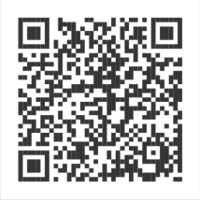
Constitution QR Link

nsbc-colorado-constitution
(Scan or click here to view)

Code/Statute QR Link

colorado State Education Codes/Statutes
(Scan or click here to view)

JOIN YOUR STATE CHAPTER

Becoming a member provides access to events, professional development opportunities, mentorship, and collaboration with fellow members both within your state and nationwide. As an elected school board official, you will have the opportunity to vote on advocacy priorities that will shape our collective efforts, addressing specific state issues and needs. This initiative solidifies the principles of a bottom-up approach to government decision-making, emphasizing citizen involvement and local participation while prioritizing community needs and individual empowerment over centralized control.

Become A Member
Stay Connected with the State Chapter

Upcoming National Events

December 1, 2025 @ 12:00 pm – 1:00 pm
Time Zone: EST

NSBC December Executive Board Monthly Meeting

More Information
February 2, 2026 @ 12:00 pm – 1:00 pm
Time Zone: EST

NSBC February 2026 Executive Board Monthly Meeting

The February Executive Board will discuss established goals and actionable plans to ensure our success.
More Information
May 4, 2026 @ 12:00 pm – 1:00 pm
Time Zone: EST

NSBC May Executive Board Meeting

More Information
April 6, 2026 @ 12:00 pm – 1:00 pm
Time Zone: EST

NSBC April Executive Board Meeting

More Information
January 4, 2027 @ 12:00 pm – 1:00 pm
Time Zone: EST

NSBC January 2027 National Executive Board Meeting

More Information
December 7, 2026 @ 12:00 pm – 1:00 pm
Time Zone: EST

NSBC December Executive Board Meeting

More Information
1 2

UPCOMING LOCAL EVENTS

November 26, 2025 @ 12:00 pm – 1:00 pm
Time Zone: EST

NSBC (West) Region 4: November Chairmen’s Leadership Meeting

The regional leadership meeting will occur on the fourth Wednesday of every month, bringing together state leadership from the western region. ((Time is 9 am Pacific, 10 am Mountain, 11 am Central, and Noon Eastern))
More Information
December 17, 2025 @ 12:00 pm – 1:00 pm
Time Zone: EST

NSBC (West) Region 4: December Chairmen’s Leadership Meeting

The regional leadership meeting will occur on the fourth Wednesday of every month, bringing together state leadership from the western region. ((Time is 9 am Pacific, 10 am Mountain)

More Information
December 17, 2025 @ 12:00 pm – 1:00 pm
Time Zone: EST

NSBC (West) Region 4: December Chairmen’s Leadership Meeting Copy

The regional leadership meeting will occur on the fourth Wednesday of every month, bringing together state leadership from the western region. ((Time is 9 am Pacific, 10 am Mountain)

More Information
January 28, 2026 @ 12:00 pm – 1:00 pm
Time Zone: EST

NSBC (West) Region 4: January Chairmen’s Leadership Meeting

The regional leadership meeting will occur on the fourth Wednesday of every month, bringing together state leadership from the western region. ((Time is 9 am Pacific, 10 am Mountain)

More Information
February 25, 2026 @ 12:00 pm – 1:00 pm
Time Zone: EST

NSBC (West) Region 4: Monthly Chairmen’s Leadership Meeting

The regional leadership meeting will occur on the fourth Wednesday of every month, bringing together state leadership from the western region. ((Time is 9 am Pacific, 10 am Mountain)

More Information
National School Boards Coalition
Menu
  • Home
  • About
  • Advocacy
  • Press Announcements
  • State Chapters
  • Connect
  • Events
  • Contribute
  • Resources
  • Press Announcements
National School Boards Coalition

We welcome collaboration and appreciate your interest; however, we kindly ask that you respect our team’s handiwork and intellectual property. Our resources are available as a courtesy, with the condition of obtaining permission and recognizing the source. All content on this website – including toolkits, PowerPoints, books, one-pagers, as well as program goals – is protected by copyright and trademarks belonging to Best In Ed, LLC, DBA NSBC.

501 c3 Nonprofit | EIN: 99-3735185 | Privacy Policy

National School Boards Coalition is a project of Best In Ed
1455 Pennsylvania Ave NW Ste. 400 Washington DC 20004
© 2026 Best In Ed. All Rights Reserved.

School Resource Officers (SROs)

images (6)

The National School Boards Coalition (NSBC) supports having a School Resource Officer (SRO) in every school because of their vital role in creating a secure learning environment by providing an immediate, professional response to emergencies and high-level threats that school staff are not equipped to handle. Beyond physical security, SROs follow a “triad model” in which they serve as mentors and educators, building positive relationships between youth and law enforcement that can de-escalate conflicts before they escalate. By acting as a visible deterrent and a trusted resource for students, we believe SROs help prevent crime on campus and provide a safer learning envireoment, allowing students and teachers to focus on education. 

National School Safety Statistics (2024–2026)

As of 2026, school safety strategies increasingly rely on a mix of specialized personnel, advanced technology, and school resource officers. 

  • Declining Violence Trends: There were 233 school shooting incidents in 2025.
  • Incident Locations: Approximately 60% of safety incidents occur outside the classroom—in hallways, parking lots, and cafeterias—where SROs typically patrol.
  • SRO Presence: About 46% of traditional public schools utilize SROs, compared to only 18% of charter schools.
  • Impact on Discipline: Research indicates schools with SROs experience 30% fewer physical fights but see a 21% to 90% increase in suspensions and expulsions.
  • Detection: The presence of an SRO is linked to a 150% increase in the detection of firearms on campus. 

Prevalence by School Level

SROs are significantly more common in secondary schools than in elementary schools. According to the National Center for Education Statistics (NCES) and Brookings Institution research: 

  • High Schools: Approximately 71% to 72% employ SROs.
  • Middle Schools: Approximately 38% to 63% employ SROs.
  • Elementary Schools: Only about 17% to 30% have a stationed SRO

In the last 10 years, school shooting incidents have occurred most frequently at the high school level, with the highest deaths among elementary school levels. According to data from the K-12 School Shooting Database and USAFacts, high schools account for approximately 61% of all recorded incidents since 2000. 

Incidents by School Level (1999–2025)

The distribution of active shooter incidents across grade levels remains consistent over time, with high schools being the most common site: 

School Level 

Percentage of Incidents

High School

55% – 61%

Middle / Junior High

12% – 22%

Elementary School

16% – 23.6%

K-8 or K-12 Campus

3.4% – 5%

Key Trends in the Last Decade

  • Recent Surge: School shooting incidents have skyrocketed since 2015. The number of annual shootings with casualties rose from 11 in 2012 to a high of 93 in 2022.
  • Record-Setting Years: The 2021–2022 school year recorded the highest number of incidents (327) and casualties (350) in over two decades.
  • Total Casualties: Between 2000 and 2022, there were 328 casualties (131 killed, 197 wounded) in active shooter incidents at elementary and secondary schools.
  • 2025 Update: There were 233 shooting incidents at K-12 schools in 2025, resulting in 148 to 221 injuries and fatalities. This represented a decrease from the peak of 352 incidents in 2023. 

Characteristics by Grade Level

A U.S. GAO analysis noted that the nature of these shootings often varies by school level and location: 

  • High Schools: Often involve disputes or grievances between students, staff, or gangs.
  • Elementary Schools: While less frequent, these schools are more often the site of “school-targeted” shootings, which tend to have the highest fatality rates per incident, such as the 2022 shooting at Robb Elementary in Uvalde, Texas. 

Local Decision Making

National-Scool-Boards-Assocation-Local-Control-Education

The National School Boards Coalition (NSBC) advocates for the incorporation of school board leaders in the discussions surrounding the dismantling of the US Department of Education, which we believe has negatively impacted local education systems. Emphasizing the return of decision-making power to school boards and communities highlights the need for a clear pathway that promotes collaboration with the USDOE during this transition.

School board officials recognize that state departments of education serve as an additional layer of government that can often hinder local communities’ ability to make decisions regarding policies, budgets, and curriculum. These decisions should ideally reflect the specific needs and priorities of those communities. Therefore, the NSBC urges acknowledgment that directing funding to states does not effectively support local districts. Instead, resources should be allocated directly to districts, locally, where elected representatives make informed decisions that best serve their communities.

Hold Publishing Companies Accountable

National-Scool-Boards-Assocation-Hold-Publishers-Accountable

The National School Boards Coalition (NSBC) expresses urgent concern regarding the increased politicization of K-12 curriculum and supplemental materials for decades, particularly since 2020. It has become evident that content provided by curriculum publishers is often laced with bias, utilizing teacher support materials to highlight topics and illustrations leaning toward polarizing viewpoints.

School boards frequently find themselves trapped in adopting the lesser of two evils, which compounds this troubling trend and necessitates immediate investigation and accountability. We call for Congress to thoroughly examine these companies’ ties to political organizations and internal employee associations that exhibit anti-American and radical affiliations. It is imperative to address the influence they wield in promoting a blanket of political ideology on K-12 students, all under the guise of education.

Their failure to deliver a curriculum that prioritizes the foundational basics of reading, writing, mathematics, science, and unbiased history, all funded by taxpayer dollars, cannot continue while American students graduate without essential knowledge in these critical areas. We must ensure our education system remains dedicated to equipping students with appropriate and necessary knowledge.

While the NSBC will continue to educate and support school boards in seeking alternatives, we must acknowledge that this is a larger issue requiring broader attention. The challenges posed by politicized curriculum materials extend beyond individual districts and demand a collective response. Addressing this comprehensively helps ensure our education system effectively equips students for success.
The NSBC urges swift action to hold these publishing companies accountable and to safeguard the integrity of our students’ education.

Advocacy for Choice

National-Scool-Boards-Assocation-School-Choice-Students

The National School Boards Coalition (NSBC) recognizes the importance of educational choice and is committed to advocating for students while empowering school board members to support this choice. We believe that parents have a fundamental right to select the learning environments that best suit their children’s unique educational needs. In a diverse educational landscape, where a single approach may not work for everyone, the ability to make choices is vital for students’ individual growth and success.

This advocacy begins with cultivating a choice-friendly culture within school districts, initiated by strong leadership from superintendents who understand the importance of diverse educational options. Districts should proactively share local tax revenues with charter schools and be more receptive to charter applications, ensuring these institutions can thrive and contribute to the educational landscape. Additionally, increasing transparency with parents upon enrollment regarding state funding availability from Education Savings Accounts (ESAs) or vouchers for local private school options further enhances educational opportunities.

NSBC members strive to promote superior public school education while supporting families that seek alternatives.

By implementing policies to facilitate local school choice opportunities and forming partnerships with private schools and homeschool co-ops, districts can broaden access to extracurricular programs and specialized activities, such as band and JROTC. Prioritizing education choice not only benefits students but also enriches the entire educational ecosystem, ensuring every child has the opportunity to thrive.